
Satire & Commentary
By El Pepito | El Pueblo’ito
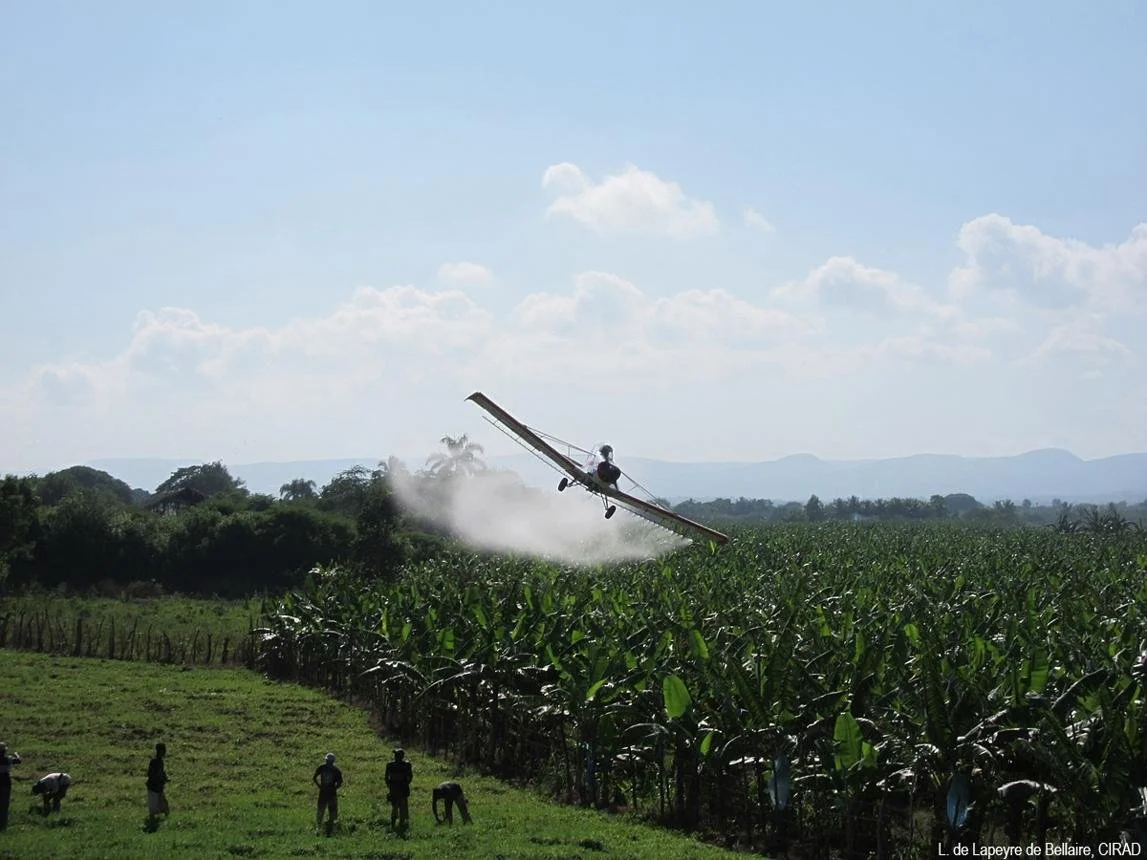
SAN MATEO, COSTA RICA — Residents of a local ecovillage were reportedly stunned this week to learn that Costa Rica, internationally celebrated for its lush rainforests, biodiversity, and environmental leadership, also uses approximately eight times the global average amount of agricultural pesticides per hectare of cropland.
The discovery has unsettled several homeowners who relocated specifically to escape the chemicals, industrial agriculture, and questionable food systems of their home countries.
“But everything here is so green,” explained one resident.
Agricultural experts confirmed that this is generally what happens when plants are alive.
Pura Vida, Pura Química
According to recent international agricultural data, Costa Rica remains among the world’s more pesticide-intensive countries.
The revelation has caused considerable confusion among expatriates who assumed that purchasing vegetables beside a dirt road constituted organic certification.
“I buy everything from a little farmer who sells produce out of his truck,” explained one resident. “He seems very connected to the earth.”
Asked whether the farmer used pesticides, she appeared uncomfortable.
“I don’t like to interrogate people about their personal choices.”
Another homeowner expressed surprise that the bananas sold in local supermarkets might originate from industrial plantations.
“They have monkeys on the packaging,” he explained.
The Organic Certification Process
In the absence of formal certification, several residents have developed their own methods for determining whether food is organic.
These include buying from someone wearing sandals, selecting vegetables with dirt still attached, and avoiding produce displayed under fluorescent lighting.
One resident explained that she only purchases eggs from chickens that appear happy.
She has not established how the chickens communicate this.
Another insists that vegetables purchased at a farmers market are inherently healthier because the transaction takes place outdoors.
Her tomatoes were grown conventionally.
She considers them spiritually organic.
A Difficult Adjustment
The revelations have forced some residents to reconsider the relationship between environmental branding and agricultural reality.
One homeowner admitted that she had never questioned the country’s farming practices because its electricity is largely renewable.
“I just assumed the whole country worked that way.”
Another argued that focusing on pesticides was unnecessarily negative when Costa Rica has accomplished so much in conservation.
“We should be celebrating the positive,” he explained, while carefully washing a strawberry for the fourth time.
A third resident suggested avoiding the term pesticides altogether, proposing plant protection products as a less judgmental alternative.
The suggestion was warmly received.
An Organic Solution
Determined to take action, several ecovillage residents have committed to growing more of their own food.
The initiative began enthusiastically with imported heirloom seeds, organic fertilizer, raised garden beds, and a lengthy discussion about permaculture.
Within two weeks, the leafcutter ants had eaten nearly everything.
One resident suggested using insecticide.
The group is no longer speaking to him.
At press time, residents remained committed to eating only organic produce, provided somebody else could figure out how to grow it.