
Where Wood Becomes Art: Exploring the Furniture Makers of Grecia and Sarchí
By Staff Writer Claudia
In the hills of Alajuela, generations of craftspeople have transformed wood into furniture, art and an enduring expression of Costa Rican identity.
Costa Rica’s Central Valley is home to communities known for agriculture, mountain scenery and a slower rhythm of life. But around Grecia and neighboring Sarchí, another tradition has shaped the region: woodworking.
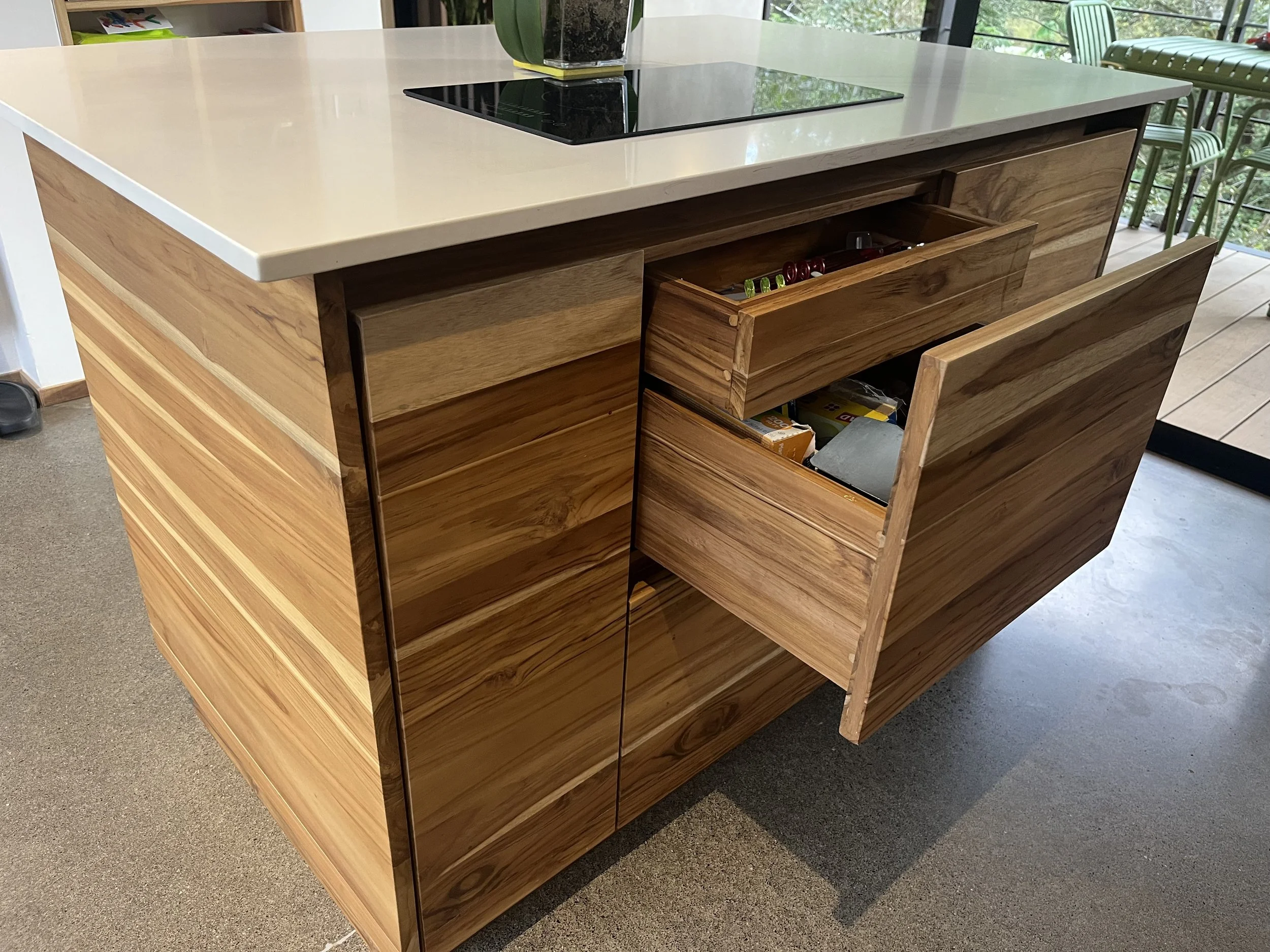
Here, furniture is often made in small workshops rather than large factories. Craftspeople turn locally familiar woods into dining tables, beds, cabinets, rocking chairs and decorative pieces, sometimes using techniques passed from one generation to the next.
For residents of Ecovilla San Mateo, the area offers more than a shopping trip. It is an opportunity to meet the people who make the objects that will become part of our homes.
Grecia: The Gateway to the Region
Grecia is best known for its striking red metal church, pleasant town center and surrounding coffee-covered hills. Travel beyond the center and you begin to encounter workshops, showrooms and family businesses producing everything from traditional hardwood furniture to clean, contemporary designs. Some shops maintain ready-made inventories, while others work primarily by commission.
This makes the experience different from visiting a conventional furniture store. Customers may be able to choose the wood, dimensions, stain, hardware and other details. A piece can be adapted to fit a particular wall, room or purpose rather than forcing the room to accommodate the furniture.
Sarchí: Costa Rica’s Cradle of Craftsmanship
A short drive from Grecia brings visitors to Sarchí, a town whose name has become nearly synonymous with Costa Rican craftsmanship.
Sarchí is internationally recognized for its brightly painted oxcarts. Once essential to transporting coffee from the mountains to market, the carreta evolved into one of the country’s most recognizable cultural symbols. Its elaborate geometric patterns, vivid flowers and bold colors now appear on signs, furniture, and decorative objects.
The town’s artistic identity extends well beyond the famous oxcart. Woodworkers throughout the area produce tables, chairs, beds, cabinets, doors, and custom architectural pieces. Some preserve traditional forms, while others combine Costa Rican woods with modern lines suited to newer homes.
Beyond the Painted Oxcart
The most interesting part of visiting Grecia and Sarchí may be seeing how broad the region’s woodworking tradition really is.
One workshop may specialize in rustic furniture with heavy proportions and visible grain. Another may produce refined cabinetry with precise joinery and a smooth finish. Elsewhere, artisans create smaller objects like bowls, cutting boards, religious pieces, carved animals, and brightly painted souvenirs.
Speaking directly with the maker also creates a connection that disappears when furniture is purchased from a warehouse. You can ask where the wood came from, how the piece was constructed and who made it.
Bringing the Story Home
Furniture fills a practical need, but handmade furniture can carry something more. It bears the marks of its material, its maker and the place where it was created.
For a community like ours, where many residents got rid of all their furniture to build a new life in Costa Rica, there is value in looking locally to make your new house feel like home.