
By Staff Writer Claudia
For many of us living in San Mateo, Puntarenas brings to mind a walk beside the ocean, something cold to drink, and a little relief from the inland heat. But behind that familiar seaside outing is a city that helped connect Costa Rica to the wider world.
Before it became a place to spend a Sunday, Puntarenas was a place where the country’s future passed through, one shipment, one cart, and eventually one train at a time.
A city shaped by sand
Puntarenas owes its name to its geography: a point of sand. The narrow strip of land developed through the movement of sediment, currents, and wind. Its shape is more than a curiosity on a map, it helps explain why life here has always been so closely tied to the water.
The Gulf of Nicoya already had Indigenous settlements long before the Spanish arrived. The history of the port city belongs within that much older human landscape, rather than beginning with its colonial recognition.
In 1814, Puntarenas received the designation of Puerto Mayor, an important trading port, following the advocacy of Costa Rica’s representative in Spain, the priest Florencio del Castillo.[1][2]
Coffee finds a way to the sea
As coffee production expanded during the nineteenth century, Puntarenas became a vital outlet for exports to markets including Chile and Great Britain. Coffee grown inland needed a route to the sea, and the port provided that connection.
Picture the work behind that trade: carts carrying produce from the interior, goods waiting to be loaded, and people earning their living moving cargo between land and water. This was the everyday labor behind Costa Rica’s growing participation in international commerce.
Puntarenas received its city title in 1858. Its importance was measured in more than the ships offshore: it was becoming a community of homes, businesses, and public services.[2]
The railway brings the coast closer
The railway linking San José and Puntarenas opened on July 23, 1910. It connected the Central Valley with the Pacific coast along a 132-kilometer route and was electrified in 1930.[3]
For those of us near Orotina, that history has a local connection. Orotina was one of the communities along the Pacific railway route.[1] The coast and the inland towns were part of the same network of movement and exchange.
It is easy to focus on the engineering achievement: rails, bridges, and the difficult work of crossing the landscape. But a railway also changes how people imagine distance. A coastal city becomes part of an inland family’s world.
From working port to family tradition
Puntarenas had seaside visitors well before the railway was completed. By 1854, some families already maintained bathing huts and vacation homes there. During the twentieth century, the city grew into a beloved domestic holiday destination.[1]
That helps explain why “El Puerto” carries such affection. Its appeal includes the simple pleasures of a seaside visit: a walk, a meal, and time together.
The opening of Puerto Caldera in December 1981 marked another major chapter in Costa Rica’s Pacific port development.[4] The region’s maritime story continued to evolve, while Puntarenas retained the buildings, public spaces, and memories of its earlier role.
A family stop at the aquarium
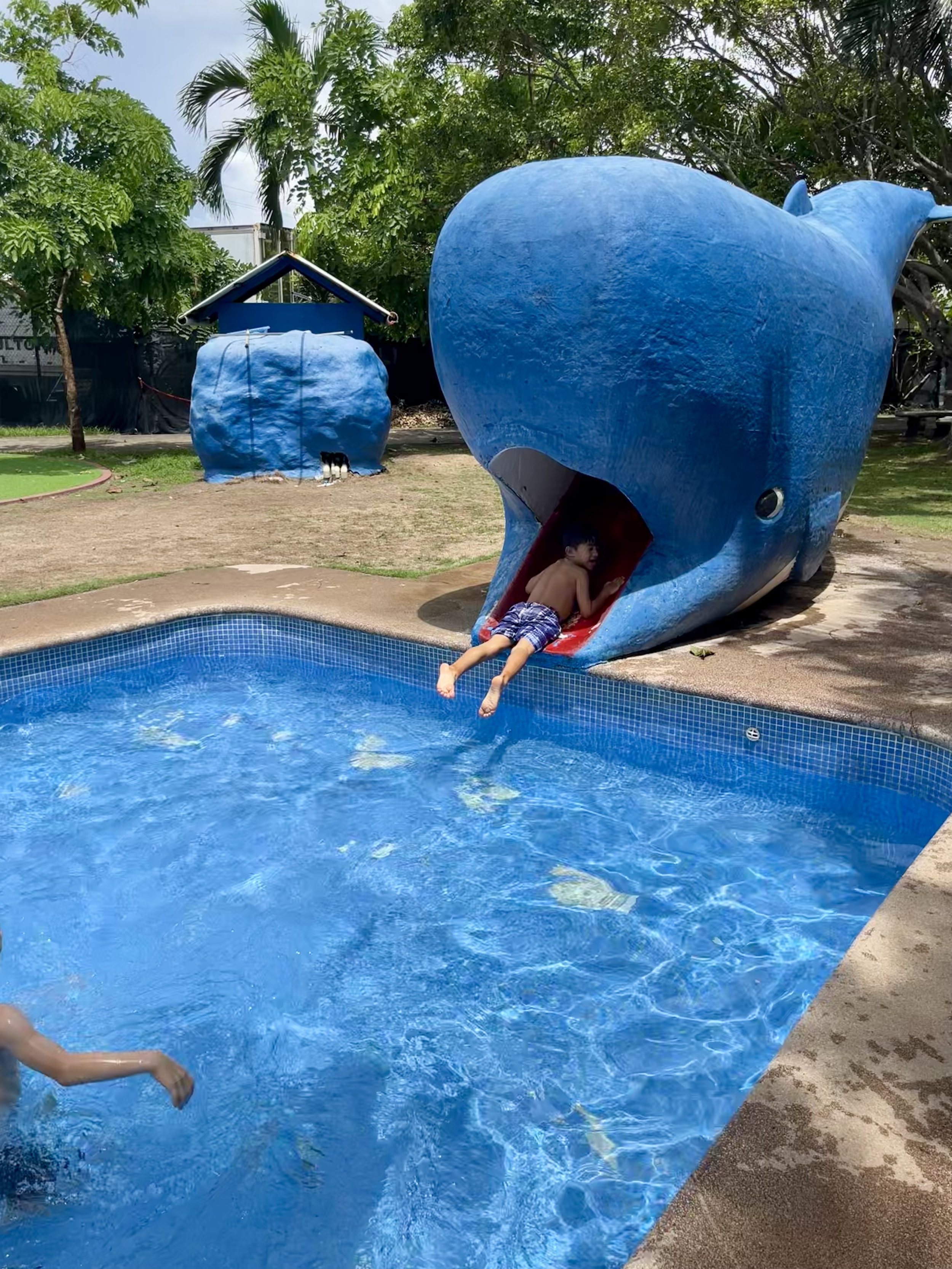
The aquarium has a small for the kids to enjoy!
A popular field trip destination for our Real World School students is to the aquarium at Parque Marino del Pacífico. This stop can bring another side of Puntarenas into view: the living world beneath the water. Its focus on marine life, environmental education, and conservation gives children a chance to connect the ocean they see from the promenade with the creatures that call it home.[5]
There is a lovely historical connection, too. The park opened in 2002 on land once occupied by the Pacific railway’s station and yards.[6] A place that once helped move people and goods now invites visitors to learn about the marine environment that has sustained this coastal community.
Make it part of a family outing: visit the aquarium, pause for lunch, and take a walk along the waterfront. Along the way, ask the children what they think the city might have sounded like when trains arrived and dockworkers loaded the ships. History becomes easier to imagine when you are standing where it happened.
Look again on your next visit
Next time you walk through Puntarenas, look for El Muellero, the monument honoring dockworkers. It offers a useful reminder: the port’s history was built by people whose names rarely receive credit for their hard work.[2]
For our growing village, there is something familiar in that thought. Infrastructure becomes a community through the people who build it, work in it, and make a life around it. Go for the sea breeze. Stay long enough to notice the history.
Sources
1. Instituto Costarricense de Puertos del Pacífico, Ciudad Puntarenas.
2. Instituto Costarricense de Turismo, Historical walks through Puntarenas.
3. Sistema de Información Cultural de Costa Rica, Antigua Estación del Ferrocarril Caldera.
4. Instituto Costarricense de Puertos del Pacífico, Historia.
5. Universidad Nacional, Acuario: Programa Parque Marino del Pacífico.
6. Municipalidad de Puntarenas, Parque marino.