
When the Construction Quieted, We Heard the Birds
Backyard birdwatching in Ecovilla San Mateo
Article and Art by Claudia
We trimmed a few branches in our backyard recently, hoping to get them off our new main house's roof. The results included a more open view that let the breezes move more freely through our casita. But the best improvement was one we hadn't fully anticipated: we could see the birds.
This weekend was unusually quiet for Ecovilla San Mateo, especially on our lot, where our main house is still under construction. Whether the crews were taking a break or neighboring projects had moved beyond their noisier stages, the usual soundtrack was missing. No cutting concrete blocks or steel. No heavy trucks working their way up the steep hills.
Instead, we heard the birds. And then we saw them.
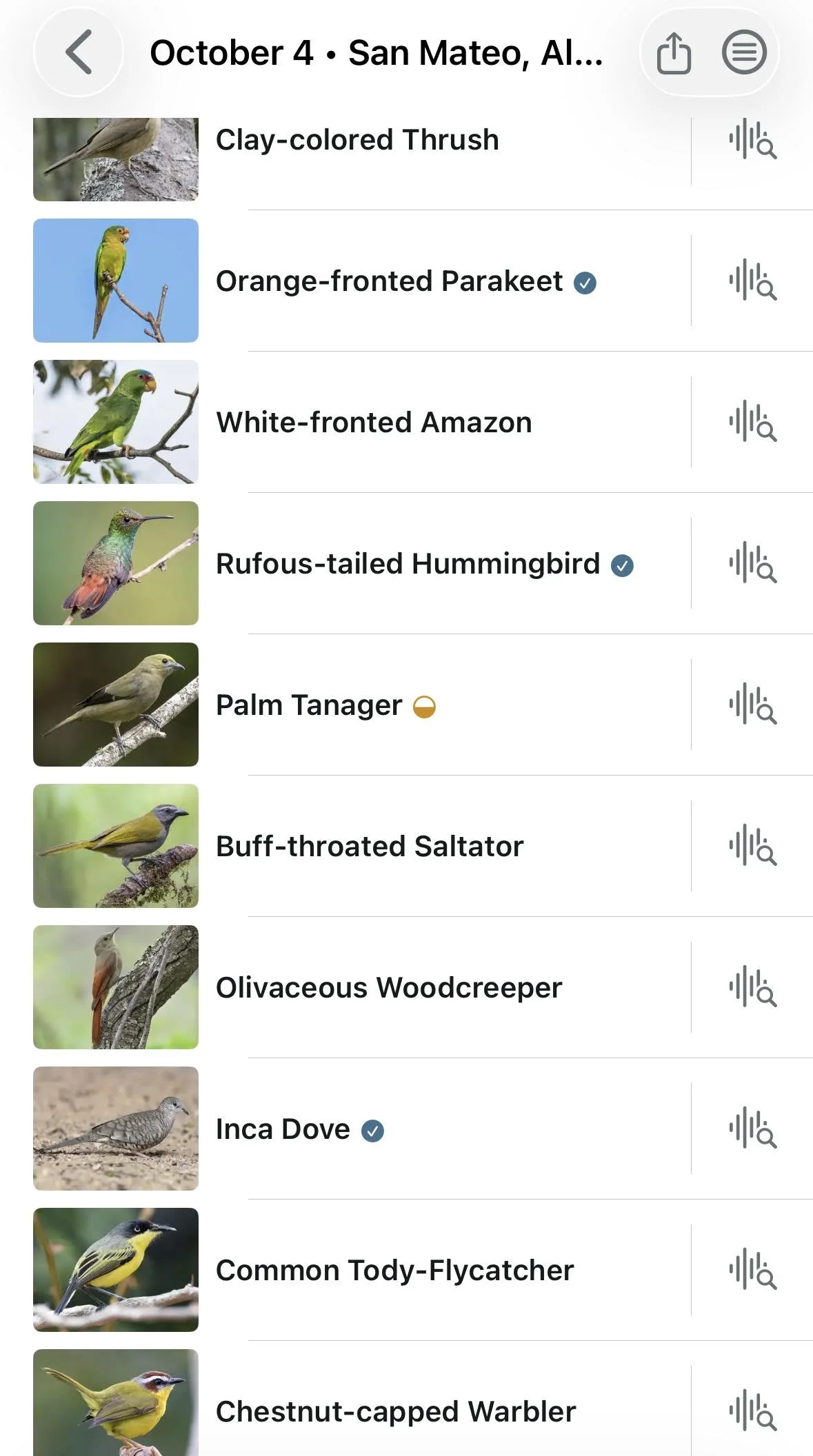
The Merlin App helped us identify these backyard birds.
They kept stopping by, seemingly to check on our construction progress and admire the upgraded views. Apparently, we weren't the only ones pleased with the tree trimming.
Our first visitor was a toucan perched in a nearby tree. There is something wonderful about seeing a bird like that outside your own home. You can know perfectly well that toucans live in Costa Rica and still feel a little astonished when one turns up in your backyard.
Toucans eat mostly fruit, although they also take insects and small animals, and sometimes eggs from other birds' nests. Fruiting trees provide meals, while mature trees offer perches and nesting cavities. They also help spread the seeds of the fruit they eat, quietly contributing to the next generation of trees as they move through the landscape.[1]
Then came a bird that briefly had us hoping we had spotted a quetzal. With my Guatemalan roots, that possibility was especially exciting.
Our visitor turned out to be a slaty-tailed trogon, with a brilliant red belly and an orange bill. It belongs to the same bird family as the quetzal, so our hopeful first impression wasn't entirely misplaced. Slaty-tailed trogons inhabit humid tropical forests and also use forest edges and clearings, often sitting quietly in the larger trees.[2]
Slaty-tailed trogons eat fruit and insects, including caterpillars, and help disperse seeds. One particularly fascinating detail: they can excavate their nests in termite nests built in trees. A patch of woodland contains more bird housing than we might imagine.[3]
Later, while we stood in our new driveway admiring the downhill drainage (yes, some of us get excited about drainage), two enormous birds glided overhead toward the Pacific.
"Eagles!" was our first reaction. But after looking up their description, white heads and bellies, we suspect they were ospreys.
Large soaring birds deserve a closer look before we give them a name. Turkey vultures, for example, can look impressively eagle-like at a distance.
They feed on carrion and use rising warm air and updrafts to travel with little flapping. Hills like ours can help provide that lift.[4]
What draws birds to a place like ESM? Looking at the needs of these species, the trees and surrounding vegetation are a good place to start: fruit, insects, shelter, nesting sites, and places to perch. The wooded patches around our homes are more than a beautiful backdrop. They are part of the birds' living space.
Our trimming made that space easier for us to see. The quiet weekend made it easier to hear. I suspect much of this activity had been happening all along, while we were listening to saws and watching deliveries.
This beautiful piece of Costa Rica continues to impress me. From our casita, it doesn't feel like deep jungle, and we aren't on the coast, although a sliver of Pacific blue sometimes reminds us how close it is.
We have green hills, cool mountain breezes moving through the house, and nature close enough to interrupt a conversation about construction. For us, it feels just right.
Most of ESM's neighbors are still planning their future home designs. This weekend, watching the birds, we had a lovely reminder of how much was already here to enjoy.
1. San Diego Zoo Wildlife Alliance: Toucan
2. Cornell Lab of Ornithology: Slaty-tailed Trogon