

Raw vegans express concern as Almendro Garden introduces produce that is exceptionally nutritious, provided consumers first neutralize its natural defenses.
Satire & Commentary
ECOVILLA SAN MATEO, Costa Rica — A community initiative to distribute fresh, organic produce has come under scrutiny after residents discovered that some vegetables require cooking, complicating an arrangement previously understood to involve picking up a basket and feeling good about it.
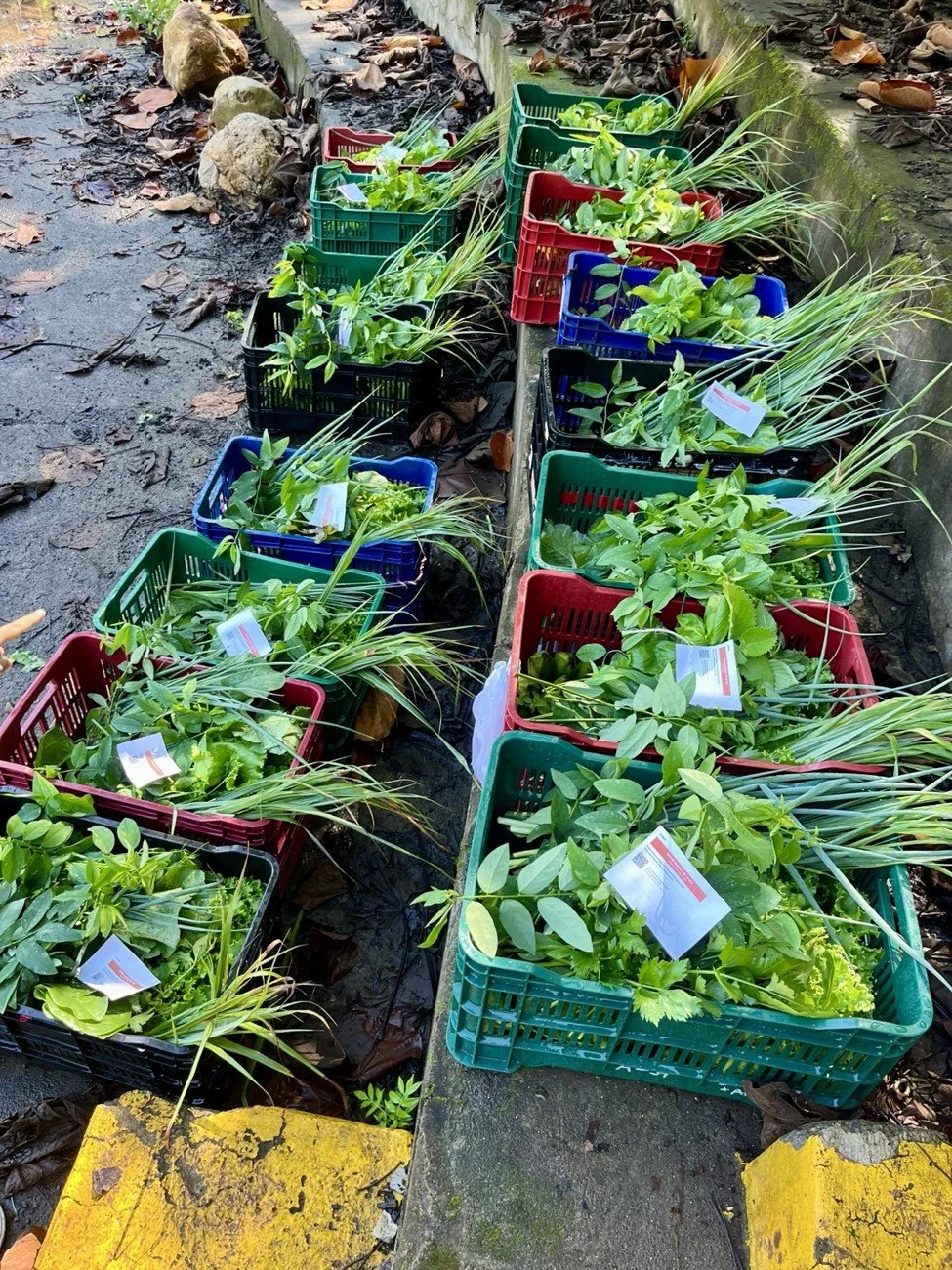
Every Friday afternoon, residents deliver empty baskets to the Almendro community garden. By 8:00 a.m. Saturday, those baskets are mysteriously filled with freshly harvested produce.
For many residents, the arrangement represents everything they envisioned when moving to an ecovillage. Locally grown food. Shared abundance. A deeper connection to the earth.
For others, the discovery that some of the earth’s offerings contain naturally occurring toxins has complicated the relationship.
“We came here to eat food in its purest form,” explained one fictional raw vegan resident. “Nobody mentioned that its purest form might kill us.”
The 6:00 A.M. Harvesting Operation
Behind the seemingly effortless basket program lies a dedicated group of volunteers who assemble at Almendro Garden at 6:00 a.m. Saturday to harvest, sort, and distribute produce.
The operation is remarkably efficient, particularly considering that most of the community is still asleep.
Investigators have confirmed that vegetables do not, in fact, place themselves into baskets.
This discovery has surprised several residents who had previously described the program as “a beautiful example of abundance flowing naturally.”
One volunteer explained that abundance flows considerably better when someone gets out of bed at 5:30.
Residents have expressed deep gratitude for this service, with several describing the early harvest as “such a beautiful way to start the day.” Their own day starts somewhat later.
The 7:30 A.M. Incident
Not everyone has embraced the Friday afternoon basket-drop-off tradition.
One fictional resident reportedly delivers an empty basket at approximately 7:30 a.m. Saturday, just thirty minutes before the scheduled collection deadline.
The practice has raised difficult questions about whether an empty basket arriving during distribution constitutes a donation or an emergency.
“Technically, it’s before eight,” the resident explained.
Garden volunteers have acknowledged the mathematical accuracy of this statement while questioning its agricultural relevance.
The resident maintains that the arrangement is perfectly reasonable because the volunteers are already there.
This is true. They are also already doing something.
Superfoods With Conditions
Meanwhile, controversy has emerged over the inclusion of chaya and yuca, two nutritious tropical crops containing naturally occurring compounds that require proper preparation.
Chaya, sometimes called tree spinach, contains cyanide-producing compounds when raw. Yuca presents similar concerns if improperly prepared.
Garden recipients have therefore received preparation warnings alongside their vegetables. Some residents described the instructions as helpful. Others felt the garden was becoming prescriptive.
The announcement has created particular distress among residents committed to raw food diets.
“Heating food destroys its life force,” explained one concerned resident.
“Not heating this one might destroy yours,” replied another.
A proposal to reclassify boiling as “thermal detoxification” has reportedly gained support among residents seeking a compromise between dietary philosophy and continued consciousness.
Others have suggested that water heated using solar energy might still qualify as raw, provided nobody uses the word cooking.
A working group has been proposed to investigate. In the meantime, the vegetables remain unmoved by the distinction.
An Unexpected Crisis of Abundance
Despite these concerns, the basket program continues to enjoy widespread enthusiasm.
Residents routinely celebrate receiving locally grown vegetables, many of which they cannot identify and several of which require a lengthy explanation before being brought into the kitchen.
Photographs of overflowing baskets have become a popular symbol of regenerative living.
Less frequently photographed are the volunteers who harvested everything before breakfast. By the time the cameras arrive, most of the regeneration has already happened.
One resident described the experience as profoundly transformative.
“I used to go to the supermarket and buy vegetables I recognized. Now I receive vegetables I have to research, identify, and occasionally disarm. It’s an incredible journey.”
At press time, the garden volunteers were preparing for another Saturday harvest.
The raw vegans were reportedly researching whether boiling water could be considered a form of fermentation.
And the 7:30 a.m. resident was preparing to drop off a basket.
On Saturday.
Editor’s Note: El Pueblo’ito celebrates the real volunteers who make community food sharing possible. All interviews and disputes described here are fictional. Chaya and yuca require proper preparation before eating. Follow reliable food-safety guidance rather than negotiating with the vegetables.